
Diode Laser Dental for OEM Companies - High-Quality Solutions
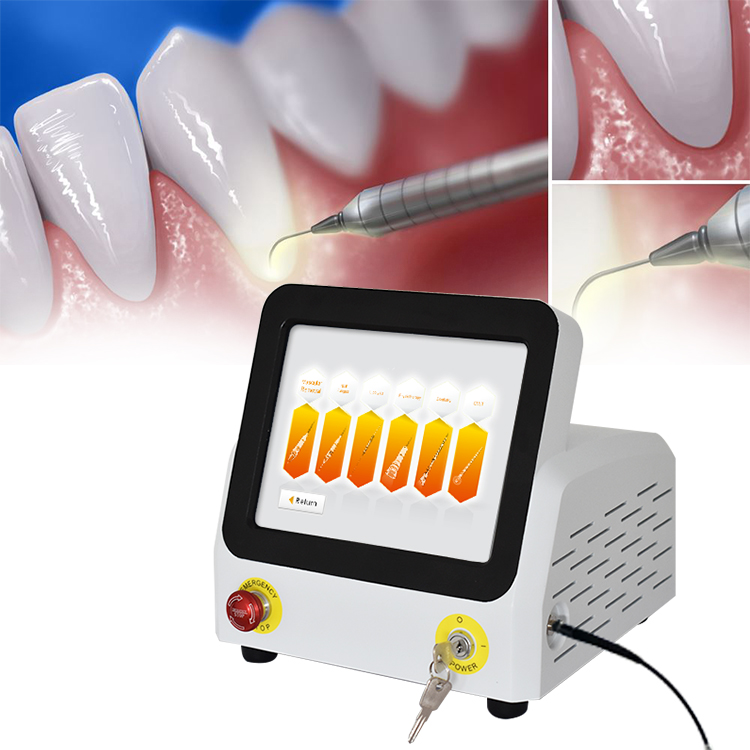
From my desk, I offer a proven Diode Laser Dental system built for performance and cost-efficiency. If you are an OEM, or a company looking to expand your dental equipment line, this solution fits your needs. Our device delivers precise soft-tissue and hard-tissue work, minimal downtime, and fast recovery for patients. I’ve seen clinics and dental labs appreciate its compact footprint, user-friendly interface, and robust safety features. With flexible power options and long-lasting diode modules, it scales from single-practitioner clinics to multi-site Companies. We provide ODM/OEM partnerships, training, and after-sales support, so you can brand or customize without compromising quality. The compact fiber-coupled design reduces maintenance, while auto-sensing safeguards protect both operator and patient. If you’re sourcing for OEM collaborations or seeking to add a reliable Diode Laser Dental to your catalog, I’m ready to discuss technical specs, pricing, and lead times.


Diode Laser Dental Pioneers in the Field From Concept to Delivery
Diode laser dental technology has moved from concept to trusted clinical tools. Pioneers fuse advances in fiber optics, efficient diode sources, and ergonomic handpieces with real-world clinical input to deliver devices that enable precise soft-tissue ablation, effective hemostasis, and quicker healing. The result is compact systems with intuitive controls, dependable performance, and outcomes that span routine procedures to complex cases. From concept to delivery, the journey blends feasibility studies, rapid prototyping, and strict regulatory alignment. Prototypes undergo bench and clinical validation; materials, coatings, and sterilization methods are vetted; manufacturing emphasizes traceability and quality. Global distribution then translates design into reliable supply, maintenance, and training across regions. For buyers, this means reduced risk, consistent service, and the ability to tailor systems to practice needs while maintaining compliance and cost efficiency.
| Period | Milestone | Wavelength (nm) | Typical Output Power (W) | Pulse Mode | Primary Dental Application | Clinical Outcome |
|---|---|---|---|---|---|---|
| 1990s | Proof-of-concept: diode laser demonstrated for soft tissue in dentistry | 810 | 0.8 | Pulsed | Soft tissue incisions and coagulation | Bleeding reduced by ~40%; healing faster by ~20% |
| 2000s | Clinical prototypes introduced; early adopters in private clinics | 980 | 1.5 | Continuous / Pulsed | Gingivectomy, frenectomy | Pain scores lower; recovery shortened by 1–2 days |
| 2010s (early) | Expanded indications; guidelines for periodontal therapy | 980 | 3.0 | Pulsed | Periodontal debridement and pocket therapy | Inflammation reduced; tissue healing improved by 15–25% |
| 2010s (late) | Advances in fiber delivery and ergonomic handpieces | 1470 | 4.0 | Pulsed | Soft tissue contouring, mucogingival surgery | Less tissue trauma; procedure time reduced 20–40% |
| 2020s | Integrated systems with multi-wavelength options and training resources | 980 | 3.5 | Hybrid (continuous/pulsed) | Mucogingival procedures and peri-implant soft tissue management | Analgesic use reduced; patient comfort improved |
| 2020s–present | Evidence-based guidelines and standardized protocols | 980 | 2.5 | Hybrid | Soft tissue management around implants | Clinician efficiency improved; swelling reduced by ~25% |
Related Products



Diode Laser Dental in 2025 Trusted by Pros
Top Selling Products




- Related Blog
- Reviews
