Lasers have revolutionized the field of Otolaryngology—Head and Neck Surgery. What was once considered a “star-trek” fantasy is now a staple in operating rooms, offering an unparalleled level of precision. Here is a comprehensive look at how laser technology is reshaping ENT treatment.
Treatment Principle
The therapeutic power of lasers in ENT is based on the principle of selective photothermolysis and vaporization.
Unlike traditional cold steel instruments that rely on mechanical cutting, lasers deliver a concentrated beam of light at a specific wavelength. When this light interacts with tissue, it is absorbed by water molecules or hemoglobin. This absorption generates intense heat, causing the target cells to vaporize or coagulate instantly.
CO₂ Laser: The gold standard for laryngeal surgery. It is highly absorbed by water, providing precise cutting with minimal thermal spread.
Diode Lasers: These are often used via flexible fibers, allowing for “office-based” procedures. They target hemoglobin, making them ideal for vascular lesions (such as vocal cord polyps or telangiectasasia).
Treatment Advantages
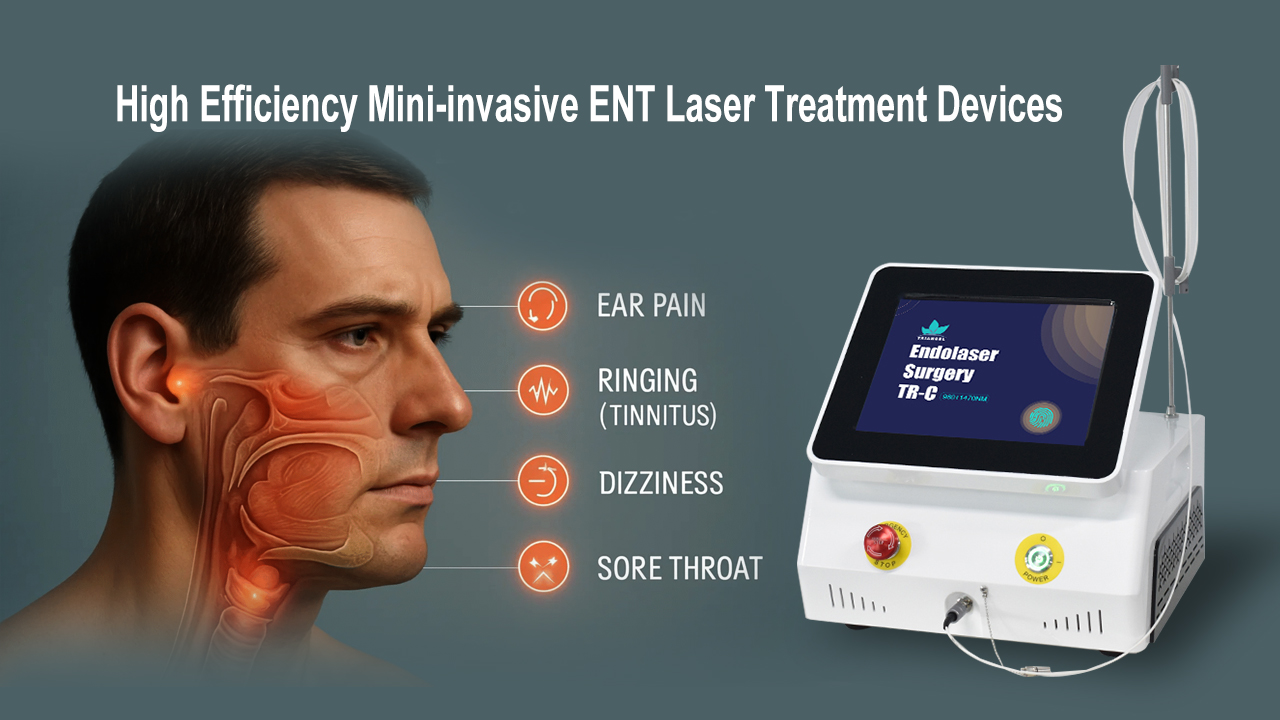
Lasers offer distinct advantages over traditional surgery:
Hemostasis (Bloodless Field): The laser seals blood vessels and lymphatics as it cuts. This is particularly crucial in the head and neck, where anatomical planes are tight and visibility is paramount.
Precision: It allows surgeons to remove lesions with micron-level accuracy, preserving surrounding healthy tissue—a critical factor in voice and swallowing preservation.
No Touch Technique: In certain cases (like recurrent respiratory papillomatosis), the laser can be used without physically contacting the tissue, reducing mechanical trauma.
Outpatient Feasibility: Modern fiber-based lasers (KTP/Diode) allow for in-office procedures under local anesthesia, avoiding the risks and costs of general anesthesia.
Primary Indications (Main Treatment Conditions)
Laser technology is utilized across the subspecialties of ENT:
Laryngology (Voice & Airway):
Benign vocal fold lesions (polyps, nodules, Reinke’s edema).
Laryngeal cancer (early-stage T1/T2 glottic carcinoma).
Recurrent Respiratory Papillomatosis (RRP).
Bilateral vocal fold paralysis (arytenoidectomy/ cordotomy).
Otology (Ear):
Stapedotomy for otosclerosis (using CO₂ or Erbium laser to create a precise fenestra in the stapes footplate without mechanical trauma).
Removal of cholesteatoma and vascular tumors of the middle ear.
Rhinology (Nose & Sinus):
Treatment of hereditary hemorrhagic telangiectasia (Osler-Weber-Rendu).
Turbinate reduction for chronic nasal obstruction.
Head & Neck:
Oral cavity leukoplakia and dysplasia.
Obstructive Sleep Apnea (Laser-Assisted Uvulopalatoplasty – LAUP).
Conclusion
Laser technology in ENT is not just a tool; it is an extension of the surgeon’s hands. By combining microscopic visualization with the physics of light, we can now treat pathologies ranging from early glottic cancer to obstructive sleep apnea with greater safety, precision, and faster recovery times than ever before.
Post time: Mar-25-2026