
The field of spinal care is witnessing a significant shift towards ultra-minimally invasive procedures, with Percutaneous Laser Disc Decompression (PLDD) emerging as a leading technological advancement. This innovative technique, which reduces painful nerve pressure through a needle-sized incision, is offering new hope to patients diagnosed with contained cervical or lumbar disc herniations.
Gone are the days when spinal surgery necessarily implied large incisions, lengthy hospitalization, and a prolonged recovery. PLDD challenges this notion by utilizing laser energy to precisely target and vaporize a small portion of the nucleus pulposus—the gel-like center of an intervertebral disc. This reduction in volume lowers the internal pressure of the disc, allowing the bulging material to retract and relieve compression on adjacent spinal nerves.
“The core advantage of Laser PLDD lies in its minimal tissue disruption,” explains a senior specialist in minimally invasive spine interventions. “The procedure is performed under local anesthesia through a cannula barely over a millimeter in diameter. Patients are conscious and able to provide feedback, enhancing safety. By preserving major musculoskeletal structures, recovery is remarkably swift, with most patients ambulatory on the same day and returning to daily activities much faster compared to traditional surgery.”
PLDD is primarily indicated for patients suffering from radicular pain (sciatica or arm pain) due to a contained disc protrusion, who have not responded adequately to conservative management over a period of time. Success hinges on stringent patient selection, with advanced imaging like MRI playing a critical role in confirming the appropriate disc pathology.
Compared to open discectomy or even some other minimally invasive techniques, PLDD demonstrates distinct benefits in terms of operative time, blood loss, post-operative pain, and overall cost-effectiveness. It represents a vital tool in the modern spine specialist’s arsenal, fitting into the treatment pathway before more invasive surgical options are considered.
Technology Background:
Percutaneous Laser Disc Decompression (PLDD) was first conceptualized in the 1980s. Its evolution and refinement have paralleled advances in laser technology and real-time imaging guidance, such as fluoroscopy. It stands as a testament to the ongoing trend in medicine from maximally invasive to targeted, micro-invasive interventions.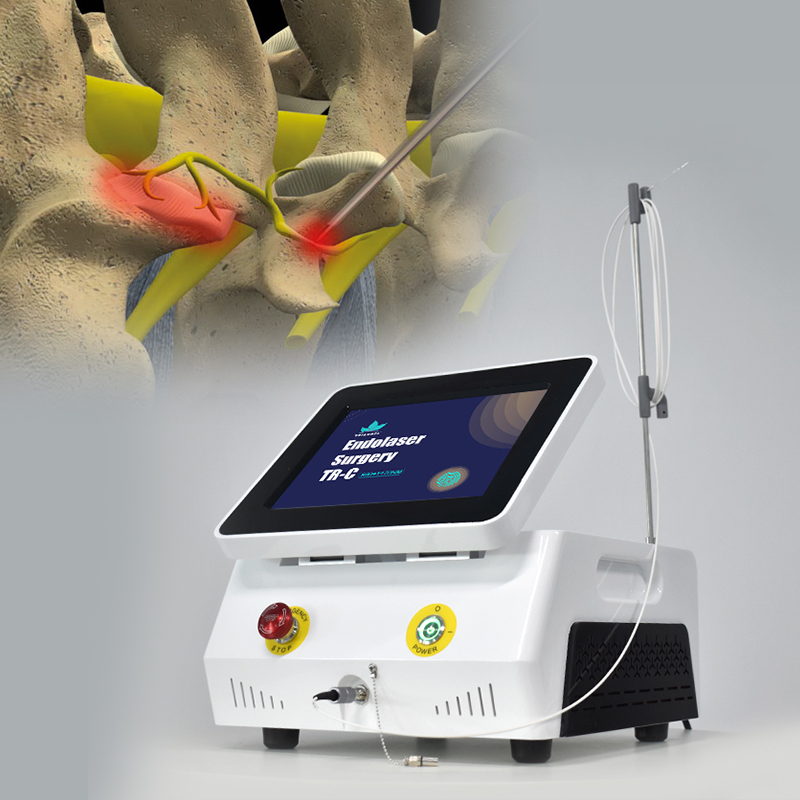
Post time: Feb-04-2026