
If you’re suffering from a slipped disc in your lower back, you might be looking for treatment options that don’t involve major surgery. One modern, minimally invasive choice is called Percutaneous Laser Disc Decompression, or PLDD. Recently, doctors have started using a new type of laser that combines two wavelengths—980nm and 1470nm—to make this treatment even better.
What is PLDD?
PLDD is a quick procedure for people with a specific kind of bulging disc (a “contained” herniation) that is pressing on a nerve and causing leg pain (sciatica). Instead of a large cut, the doctor uses a thin needle. Through this needle, a tiny laser fiber is placed into the center of the problem disc. The laser delivers energy to vaporize a small amount of the disc’s inner gel-like material. This reduces the pressure inside the disc, allowing it to pull back from the nerve and relieve your pain.
Why Use Two Wavelengths?
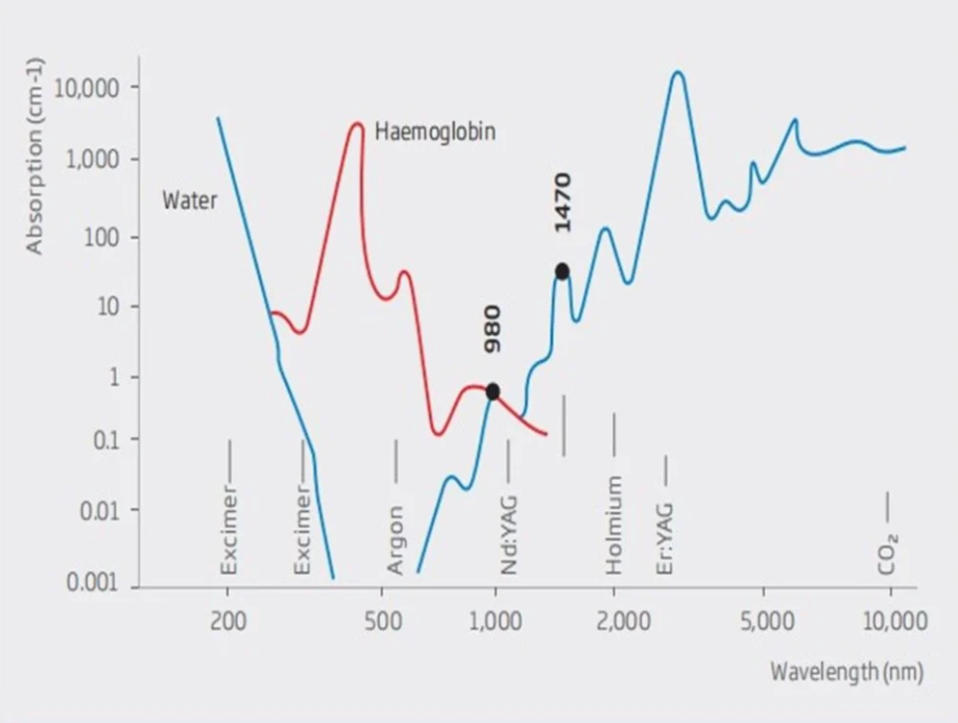
Think of the disc material like a wet sponge. Different lasers interact with its water content in different ways.
The 980nm Laser: This wavelength penetrates a bit deeper into the disc tissue. It’s great for efficiently vaporizing the core of the disc material, creating space and starting the pressure relief process.
The 1470nm Laser: This wavelength is highly absorbed by water. It works on a very precise, shallow level. It’s excellent for fine-tuning the ablation (removal) of tissue and helps seal any tiny blood vessels, which may lead to less swelling and irritation after the procedure.
By using both lasers together, doctors can get the benefits of both. The 980nm does the bulk of the work quickly, while the 1470nm helps finish the process with more control and potentially less heat spread to surrounding healthy areas.
The Benefits for Patients
Minimally Invasive: It’s a needle-puncture procedure done under local anesthesia. No large incision, no hospital stay needed.
Quick Recovery: Most people go home the same day and can return to light activities much faster than after traditional surgery.
Dual Advantage: The combination is designed to be both efficient and gentle, aiming for effective pain relief with a low risk of side effects like muscle spasms.
High Success Rate: For the right patient, this technique has shown very good results in reducing
leg and back pain and improving the ability to walk and move.
What to Expect
The procedure takes about 20-30 minutes. You will be awake but relaxed. Using X-ray guidance, your doctor will insert the needle into your back. You might feel some pressure but should not feel sharp pain. After the laser treatment, you’ll rest for a short while before going home. Soreness at the needle site is common for a day or two. Many patients feel relief from their sciatic pain within the first week.
Is It Right For You?
PLDD with the dual-wavelength laser is not for every type of back problem. It works best for a contained disc bulge that hasn’t fully ruptured. A spine specialist will need to review your MRI scan to see if you are a good candidate.
In short, the dual-wavelength (980nm/1470nm) laser represents a smart advance in PLDD technology. It combines two types of laser energy to make a already minimally invasive treatment potentially more effective and comfortable for patients seeking relief from a herniated disc.
Post time: Dec-17-2025