
Laser treatment for lumbar disc herniation has been in practice since the 1980s, so this technique’s track record is very promising.
Percutaneous laser disc decompression (PLDD) is a type of surgery in which a laser probe is inserted into the intervertebral disc space and laser energy applied for achieving decompression and neuromodulation thereby relieving the pain. PLDD is a minimally invasive procedure that falls into the category of percutaneous intervertebral surgeries with the aim to significantly reduce the patient’s pain and recover neurological deficit. It is performed under local anesthesia. By a specially designed laser, with a coefficient of absorbing energy adjusted for soft discus tissue, specific amount of heat is sent to achieve the evaporation of the water from the disc without additional thermal damage thus achieving decompression and creation of a stable intradiscal scar that will prevent herniation from reoccurring.
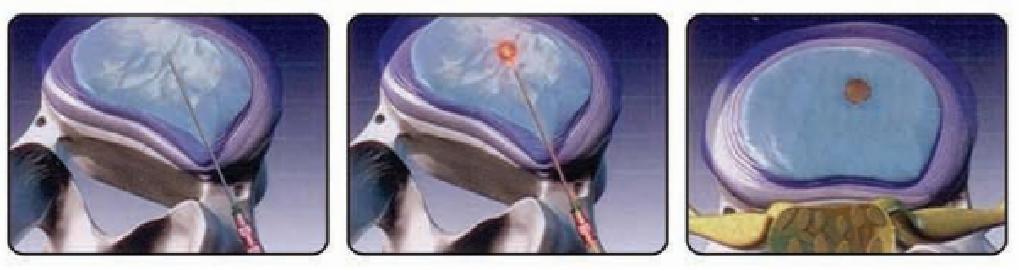
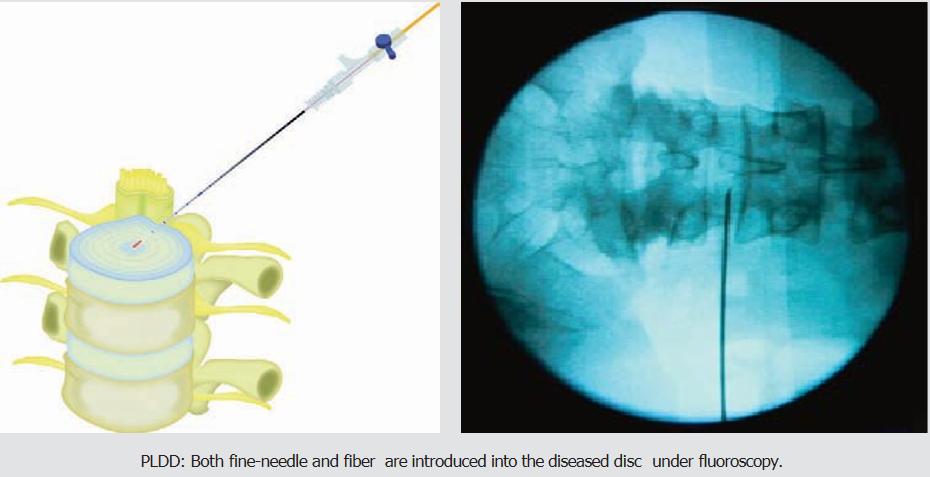
In this procedure, fluoroscopy is used to identify the herniated disc. A needle is then placed into the intervertebral disc using local anesthesia. The laser fiber is fed through the needle to the affected disc, evaporating the excess fluid. The patient is sent home to recover and is usually back on their feet within just a few short days.
This procedure has been shown to be safe and effective, is performed in an outpatient setting, and results in no scarring or spinal instability. Should future issues arise, the PLDD procedure does not limit the patient’s ability to receive other treatments. It can also be used when other surgical procedures have failed.
Post time: Jan-14-2026